
Hegel, Woodman and the Power of Photos
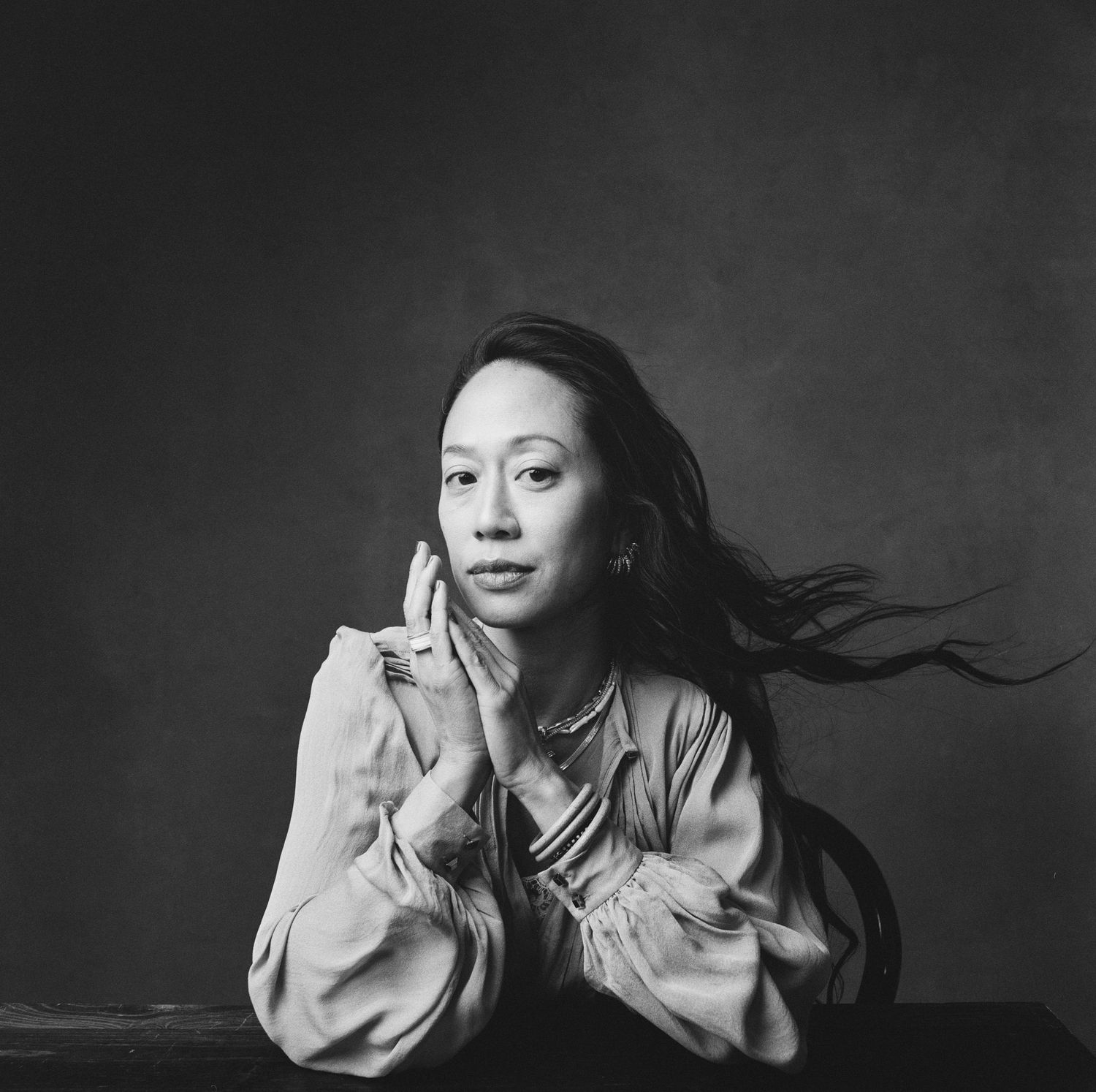
What gives an image its power?
Have you ever stood before a painting in a museum, and the world fell silent, as if a radiant power emanates from it, and awakens something within you?
Many great photos and paintings seem to have this special power. That je ne sais quoi quality sometimes elevates the image to a profound experience.
But what gives an image its power? Is it something in the way of its visual elements, such as a shallow depth of field or a motion blur?
Hegel's Aesthetics
In the last blog post, we talked about how for Hegel art is a higher reality. And Hegel also hints at this power of art. For Hegel, that je ne sais quoi quality isn’t about the image simply showing you something visually interesting or sublime—it’s about creating a productive dissonance.
A powerful image does something strange: it takes physical materials (light, pigment, pixels) and makes them mean something beyond themselves, while also taking abstract ideas (love, dignity, mortality) and giving them concrete form you can see and feel. The result is neither purely physical nor purely conceptual—it’s something that feels both familiar and alien at once. When you stand before such an image, you’re experiencing a kind of recognition that unsettles: you see something of yourself in what is clearly not you, something human in mere matter. This tension is the source of art’s power. The image doesn’t give you answers or comfort—it clarifies a problem you didn’t know you had. It shows you something about human experience that was hidden from you otherwise, making it visible precisely so you can grapple with it.
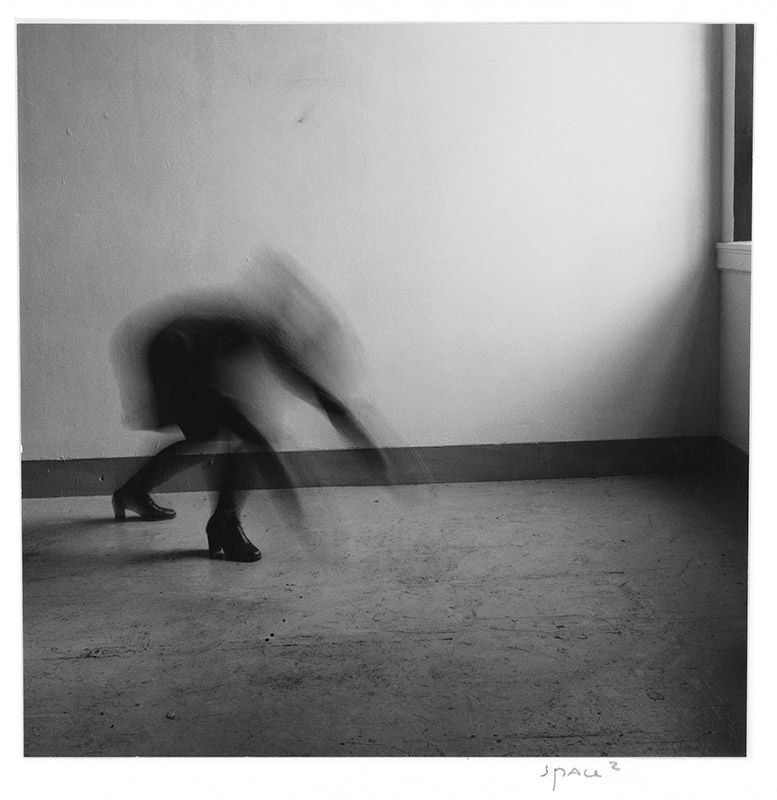
Francesca Woodman, Space², Providence, Rhode Island, 1976
© Francesca Woodman / Woodman Family Foundation
(Click image to view at Woodman Foundation)
Francesca Woodman
The most powerful art doesn’t resolve; it provokes. It reveals what needs to be understood, inviting you into a process of discovery. Few artists demonstrate this more powerfully than Francesca Woodman.
Woodman's self-portraits enact this unsettling recognition. In image after image, we encounter a figure that is unmistakably human yet rendered strange—blurred, doubled, fragmentary, dissolving into her surroundings. We recognize ourselves in her vulnerability and her struggle for presence, yet we cannot quite grasp what we’re seeing. The photographs don’t comfort us with clear answers about identity; instead, they clarify the problem itself: that selfhood is never simply given but must be constantly negotiated, made and unmade, between body and space, presence and absence. Woodman’s work reveals what usually remains invisible—the active struggle of consciousness to manifest itself through matter—and in that revelation lies its power
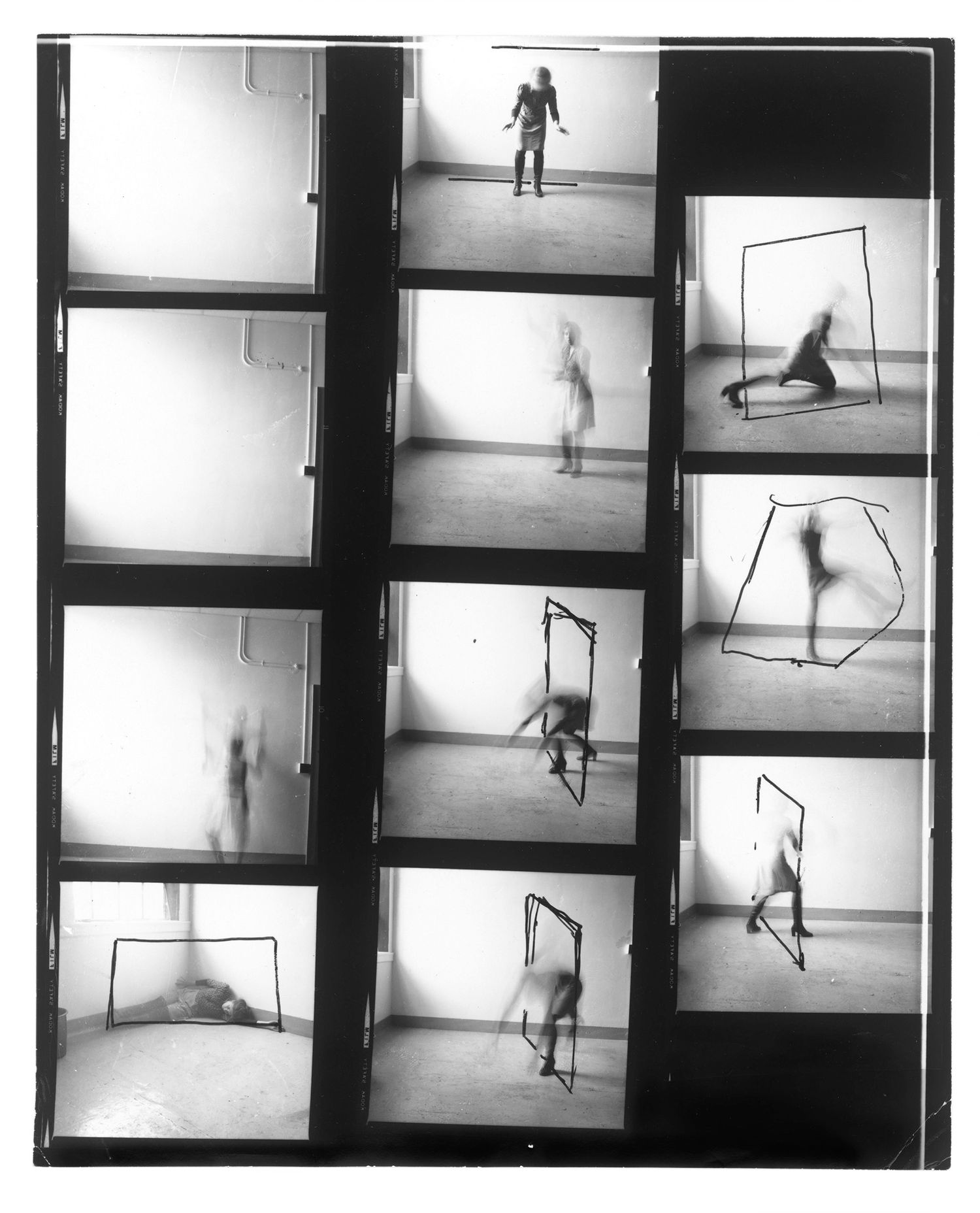
Francesca Woodman, Untitled, Providence, Rhode Island, 1976
© Francesca Woodman / Woodman Family Foundation
(Click image to view at Woodman Foundation)
Blurry Photos
This distinction helps us understand why the recent trend of motion blur often feels empty by comparison. Scroll through Instagram and you’ll find countless images employing Woodman’s visual vocabulary—blurred figures, ghostly doubles, bodies dissolving into space. Yet most lack that arresting power. The difference isn’t technical but conceptual. When motion blur becomes a stylistic choice—an aesthetic filter applied to make an image look “artistic” or “moody”—it remains purely on the surface. The blur decorates rather than disrupts; it creates atmosphere without tension.
Woodman’s blur, by contrast, emerges from necessity: it’s the only way to make visible what she’s grappling with—the impossibility of pinning down identity, the violence of being looked at, the gap between how we experience ourselves and how we appear to others. Her images don’t use blur to make things look more interesting; they use it to clarify a problem.
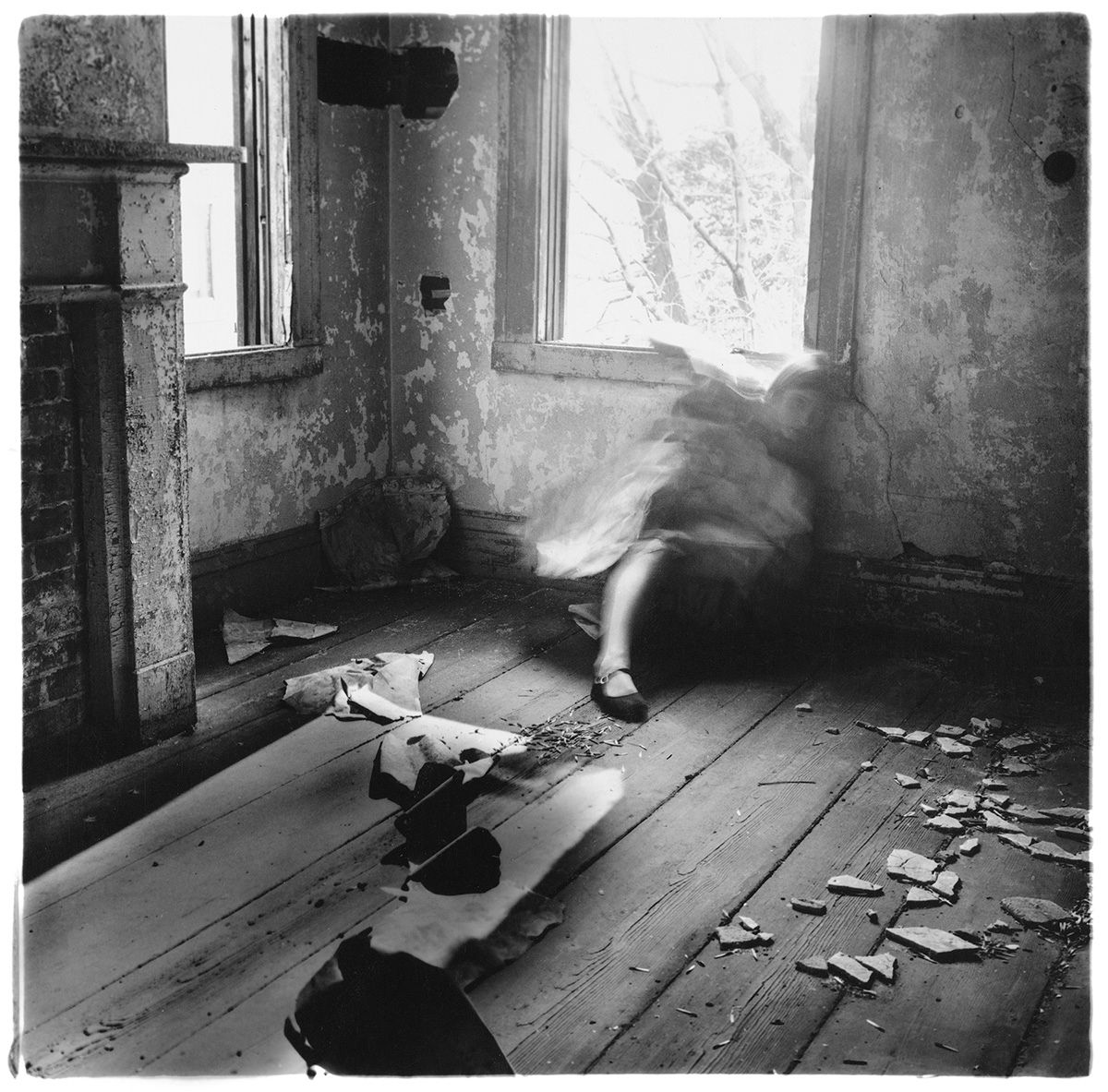
Francesca Woodman, House #3, Providence, Rhode Island, 1976
© Francesca Woodman / Woodman Family Foundation
(Click image to view at Woodman Foundation)
So what can we learn from Woodman's work? Technical choices must serve a deeper question. Before reaching for any effect—blur, shallow depth of field, dramatic lighting—ask yourself: what tension am I making visible? What hidden aspect of human experience does this image reveal? The camera isn’t a tool for making things look interesting; it’s a tool for making invisible realities visible. Start with the problem you’re grappling with—mortality, intimacy, power, vulnerability—then let technique follow from that necessity. When form serves necessary content rather than stylistic preference, that’s when your images gain the power to arrest viewers. That’s when the world falls silent before your work—not because it’s interesting, but because it’s true.
About the AuthOr
Huan Liu is a fine-art portrait photographer based in Hong Kong with a background in analytic philosophy.
